



yo mama a good read
part of the uri-nation rateyourmusic
frog up his ass or something


1. THERE ARE 3 SPECIES OF ORANGUTAN
The Bornean, the Sumatran and the recently confirmed new species (as of 2017), the Tapanuli. These great apes are only found in the wild on the islands of Borneo and Sumatra.
All three orangutan species are critically endangered. It’s difficult to determine how many orangutans are left in the world, but estimates suggest that there are just over 100,000 Bornean, fewer than 14,000 Sumatran, and less than 800 Tapanuli orangutans left.
Although they might look fairly similar with their fluffy ginger fur, Bornean orangutans have darker red coats and rounder faces than their Sumatran cousins.
But they do have some similarities - adult males have a beard and moustache - and adult female Sumatran orangutans also have beards.

2. ORANGUTANS ARE THE HEAVIEST TREE-DWELLING ANIMAL
They spend most of their lives swinging through the canopies and need vast stretches of forest to find enough food and mates.
Deforestation and hunting are the biggest threats to orangutans. Borneo alone is projected to lose 220,000 km sq of forest between 2010 and 2030 – that's almost 30% of its total land area; well over the size of the entire United Kingdom. This is largely for agriculture and infrastructure (such as roads), but forest fires are also becoming more frequent with climate change.
The good news is that studies have shown deforestation is slowing down in Borneo. And Indonesia and Malaysia are setting stronger requirements for forest protection.
3. THEY'VE GOT LONG ARMS
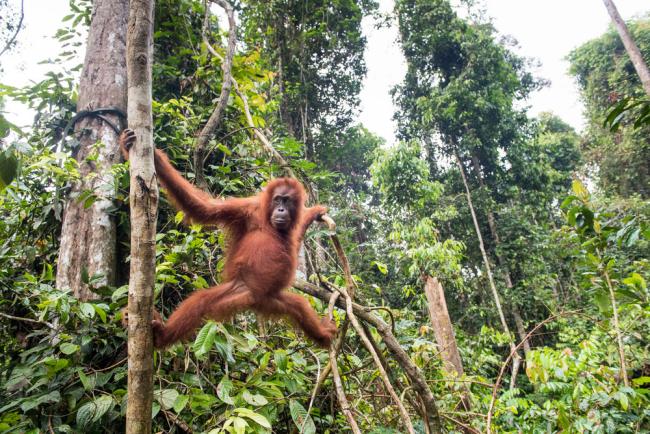
Orangutans have an arm span of about 2.2 m (over 7 ft) from fingertip to fingertip.
Considering their standing height is around 1. 5 m, this is an impressive reach. Their arms are so long in fact that they’re one and a half times longer than their legs and stretch to their ankles when standing.
4. THEY DON'T MIND EATING WITH THEIR FEET
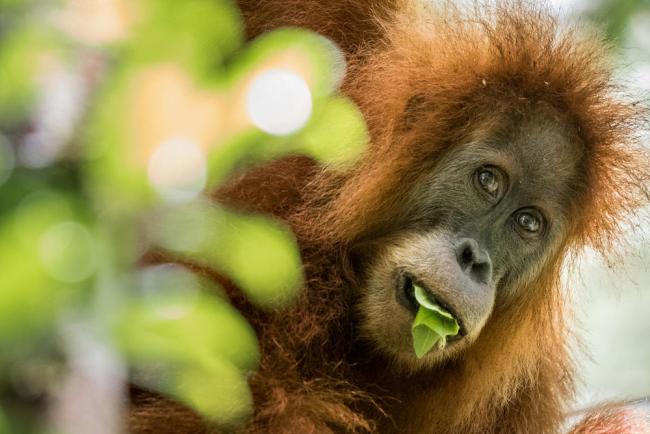
Orangutans are incredibly dexterous and use both hands and feet while gathering food and travelling through the trees.
Like us, orangutans have four fingers and a thumb, and fingernails. Their feet look almost exactly the same as their hands – designed for agile climbing and gripping.

5. THEY LEARN EVERYTHING THEY NEED TO KNOW FROM MUM
Young orangutans stay with their mother until they reach around 7 years old. They spend this time learning everything from her – including what’s good to eat.
Infants are so attached to their mums that they ride on her body and sleep in her nest until they develop their own skills to survive on their own.
Because of this long learning curve, orangutans only have young once every 7 – 9 years, which is the longest birth interval of any land mammal.
6. MALES ARE MAJESTIC
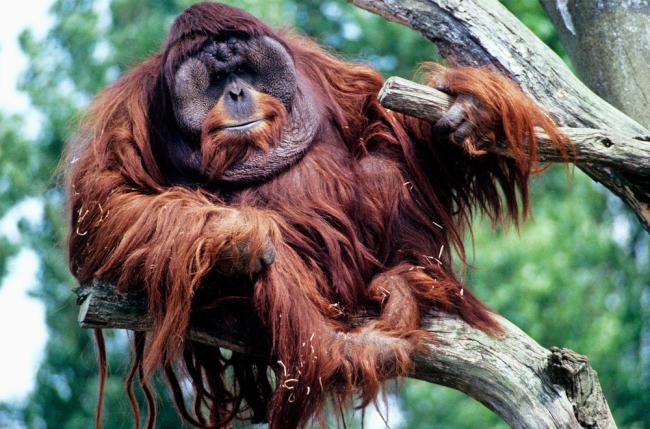
Some adult male orangutans develop flaps of fatty tissue on both sides of their face - known as flanges - which develop when they're fully mature, at around 35 years old.
Like all great apes, an orangutan has a long lifespan and can live to over 30 years in the wild—many live to 50.
Studies show that some females may consider flanges when selecting a mate.
7. THEY BUILD NESTS TO SLEEP IN
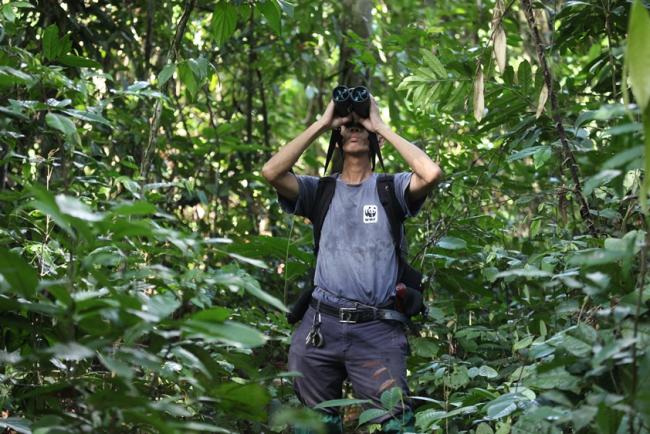
Orangutans like to be comfortable. They make a sleeping platform, or nest, every night.
An orangutan makes its nest in around 10 minutes, by pulling several large branches together, using smaller branches for a mattress and binding the structure together by weaving in more supple branches. In wet weather, they sometimes add a roof.
As orangutans make a new nest to sleep in every night, we actually use their nests to estimate their population size in any given area. We count nests both from the ground and the air as they’re much easier to spot than elusive orangutans.
8. SOME ORANGUTANS USE TOOLS
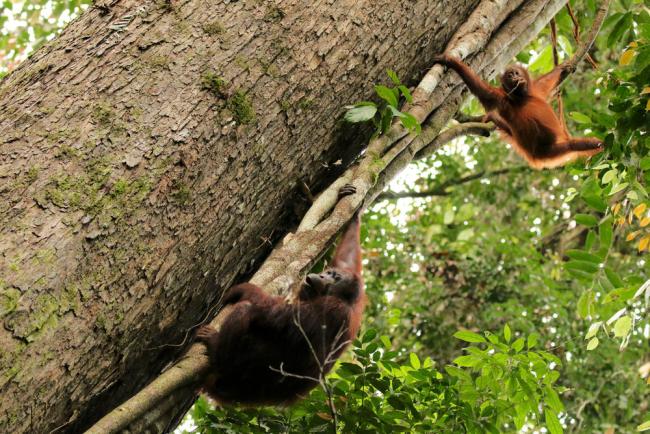
As you might have seen in Our Planet, some Sumatran orangutans use tools - like sticks to get termites, ants or bees out of tree holes.
These clever creatures have also been observed making a 'glove' out of leaves when handling prickly fruits or thorny branches.
9. THEY HAVE SMELLY TASTE IN FOOD
Orangutans mainly eat fruits, such as mangoes, lychees and figs, but they also feed on young leaves, flowers, insects, and even small mammals. Fruit makes up around 60% of an orangutan's diet, but when it’s scarcer they also eat some weird sounding things, like soil and tree bark.
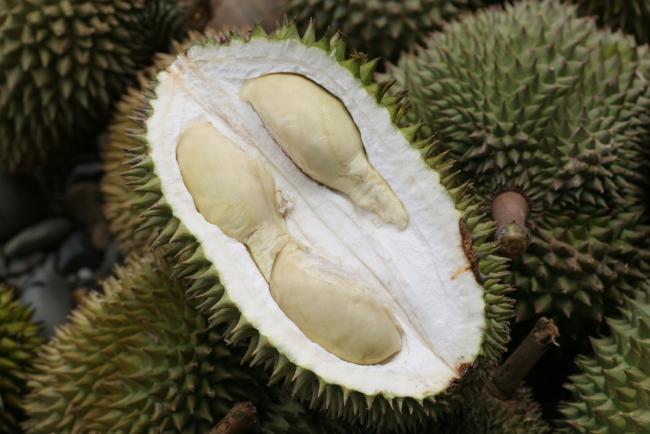
A huge spiky fruit called durian is the favourite fruit of orangutans – it's best known for its stench, which has been likened to sewage, rotting flesh and smelly socks. Tasty.
10. ORANGUTANS ARE UNDER GRAVE THREAT
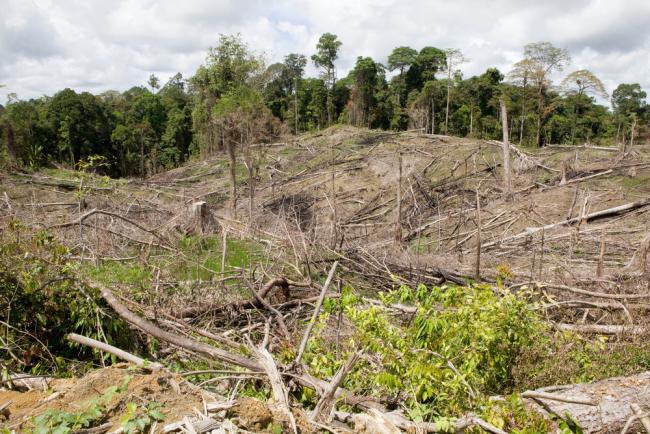
It's estimated that over 100,000 Bornean orangutans were lost between 1999 and 2015. The main threat is the loss or fragmentation of their forest habitat, caused by logging for timber materials, forest fires and making way for oil palm plantations.
Oil palm trees produce palm oil - an edible vegetable oil - which is used in many products, from toothpaste to pizza. Indonesia and Malaysia make up over 85% of the global supply of palm oil.
Cutting down pristine rainforest to make more palm oil is incredibly unsustainable and releases lots of carbon into the atmosphere. But the good news is that we can produce palm oil sustainably - protecting species like the orangutan - if we ensure that it is deforestation free. This means planting on already degraded land rather than replacing jungle with oil palm. And palm oil itself yields far more oil than other crops such as olive oil or sunflower oil – so it needs far less land to produce the same amount of oil.
As consumers, we can fight to only buy sustainable palm oil. Boycotting isn’t the answer; demanding more action is.
The Bornean, the Sumatran and the recently confirmed new species (as of 2017), the Tapanuli. These great apes are only found in the wild on the islands of Borneo and Sumatra.
All three orangutan species are critically endangered. It’s difficult to determine how many orangutans are left in the world, but estimates suggest that there are just over 100,000 Bornean, fewer than 14,000 Sumatran, and less than 800 Tapanuli orangutans left.
Although they might look fairly similar with their fluffy ginger fur, Bornean orangutans have darker red coats and rounder faces than their Sumatran cousins.
But they do have some similarities - adult males have a beard and moustache - and adult female Sumatran orangutans also have beards.
2. ORANGUTANS ARE THE HEAVIEST TREE-DWELLING ANIMAL
They spend most of their lives swinging through the canopies and need vast stretches of forest to find enough food and mates.
Deforestation and hunting are the biggest threats to orangutans. Borneo alone is projected to lose 220,000 km sq of forest between 2010 and 2030 – that's almost 30% of its total land area; well over the size of the entire United Kingdom. This is largely for agriculture and infrastructure (such as roads), but forest fires are also becoming more frequent with climate change.
The good news is that studies have shown deforestation is slowing down in Borneo. And Indonesia and Malaysia are setting stronger requirements for forest protection.
3. THEY'VE GOT LONG ARMS
Orangutans have an arm span of about 2.2 m (over 7 ft) from fingertip to fingertip.
Considering their standing height is around 1. 5 m, this is an impressive reach. Their arms are so long in fact that they’re one and a half times longer than their legs and stretch to their ankles when standing.
4. THEY DON'T MIND EATING WITH THEIR FEET
Orangutans are incredibly dexterous and use both hands and feet while gathering food and travelling through the trees.
Like us, orangutans have four fingers and a thumb, and fingernails. Their feet look almost exactly the same as their hands – designed for agile climbing and gripping.
5. THEY LEARN EVERYTHING THEY NEED TO KNOW FROM MUM
Young orangutans stay with their mother until they reach around 7 years old. They spend this time learning everything from her – including what’s good to eat.
Infants are so attached to their mums that they ride on her body and sleep in her nest until they develop their own skills to survive on their own.
Because of this long learning curve, orangutans only have young once every 7 – 9 years, which is the longest birth interval of any land mammal.
6. MALES ARE MAJESTIC
Some adult male orangutans develop flaps of fatty tissue on both sides of their face - known as flanges - which develop when they're fully mature, at around 35 years old.
Like all great apes, an orangutan has a long lifespan and can live to over 30 years in the wild—many live to 50.
Studies show that some females may consider flanges when selecting a mate.
7. THEY BUILD NESTS TO SLEEP IN
Orangutans like to be comfortable. They make a sleeping platform, or nest, every night.
An orangutan makes its nest in around 10 minutes, by pulling several large branches together, using smaller branches for a mattress and binding the structure together by weaving in more supple branches. In wet weather, they sometimes add a roof.
As orangutans make a new nest to sleep in every night, we actually use their nests to estimate their population size in any given area. We count nests both from the ground and the air as they’re much easier to spot than elusive orangutans.
8. SOME ORANGUTANS USE TOOLS
As you might have seen in Our Planet, some Sumatran orangutans use tools - like sticks to get termites, ants or bees out of tree holes.
These clever creatures have also been observed making a 'glove' out of leaves when handling prickly fruits or thorny branches.
9. THEY HAVE SMELLY TASTE IN FOOD
Orangutans mainly eat fruits, such as mangoes, lychees and figs, but they also feed on young leaves, flowers, insects, and even small mammals. Fruit makes up around 60% of an orangutan's diet, but when it’s scarcer they also eat some weird sounding things, like soil and tree bark.
A huge spiky fruit called durian is the favourite fruit of orangutans – it's best known for its stench, which has been likened to sewage, rotting flesh and smelly socks. Tasty.
10. ORANGUTANS ARE UNDER GRAVE THREAT
It's estimated that over 100,000 Bornean orangutans were lost between 1999 and 2015. The main threat is the loss or fragmentation of their forest habitat, caused by logging for timber materials, forest fires and making way for oil palm plantations.
Oil palm trees produce palm oil - an edible vegetable oil - which is used in many products, from toothpaste to pizza. Indonesia and Malaysia make up over 85% of the global supply of palm oil.
Cutting down pristine rainforest to make more palm oil is incredibly unsustainable and releases lots of carbon into the atmosphere. But the good news is that we can produce palm oil sustainably - protecting species like the orangutan - if we ensure that it is deforestation free. This means planting on already degraded land rather than replacing jungle with oil palm. And palm oil itself yields far more oil than other crops such as olive oil or sunflower oil – so it needs far less land to produce the same amount of oil.
As consumers, we can fight to only buy sustainable palm oil. Boycotting isn’t the answer; demanding more action is.

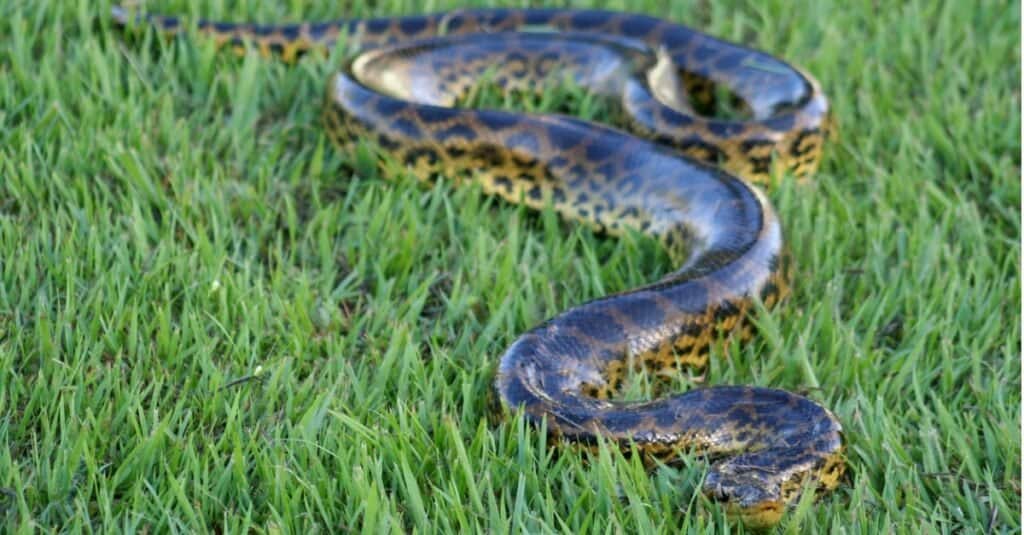 The head and neck of the
 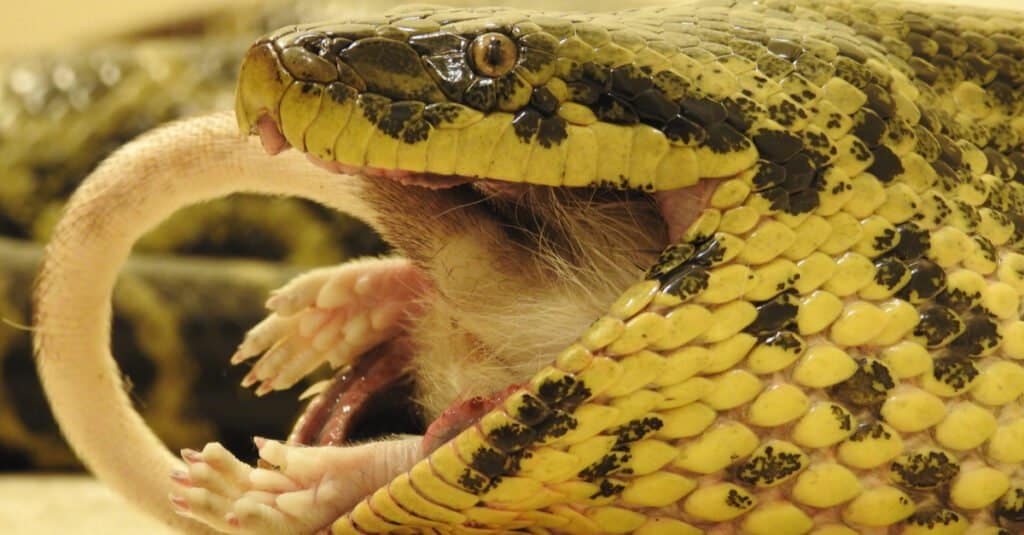 Anacondas have a slow metabolism, but they need food for the gestation
 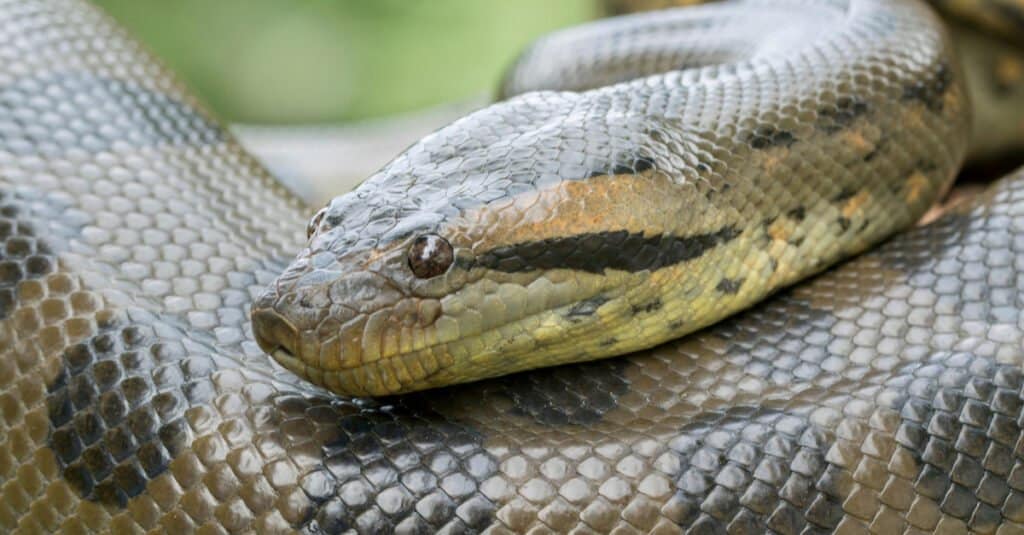 Anacondas have eyes high on their heads so they can sit and wait for prey to appear