
Toribash
1. There are over 1,400 species of bats worldwide. Bats can be found on nearly every part of the planet except in extreme deserts and polar regions(link is external). The difference in size and shape are equally impressive. Bats range in size from the Kitti’s hog-nosed bat (also called the Bumblebee Bat) that weighs less than a penny — making it the world’s smallest mammal — to the flying foxes, which can have a wingspan of up to 6 feet. The U.S. and Canada are home to about 45 species of bats and additional species are found in the U.S. territories in the Pacific and Caribbean.
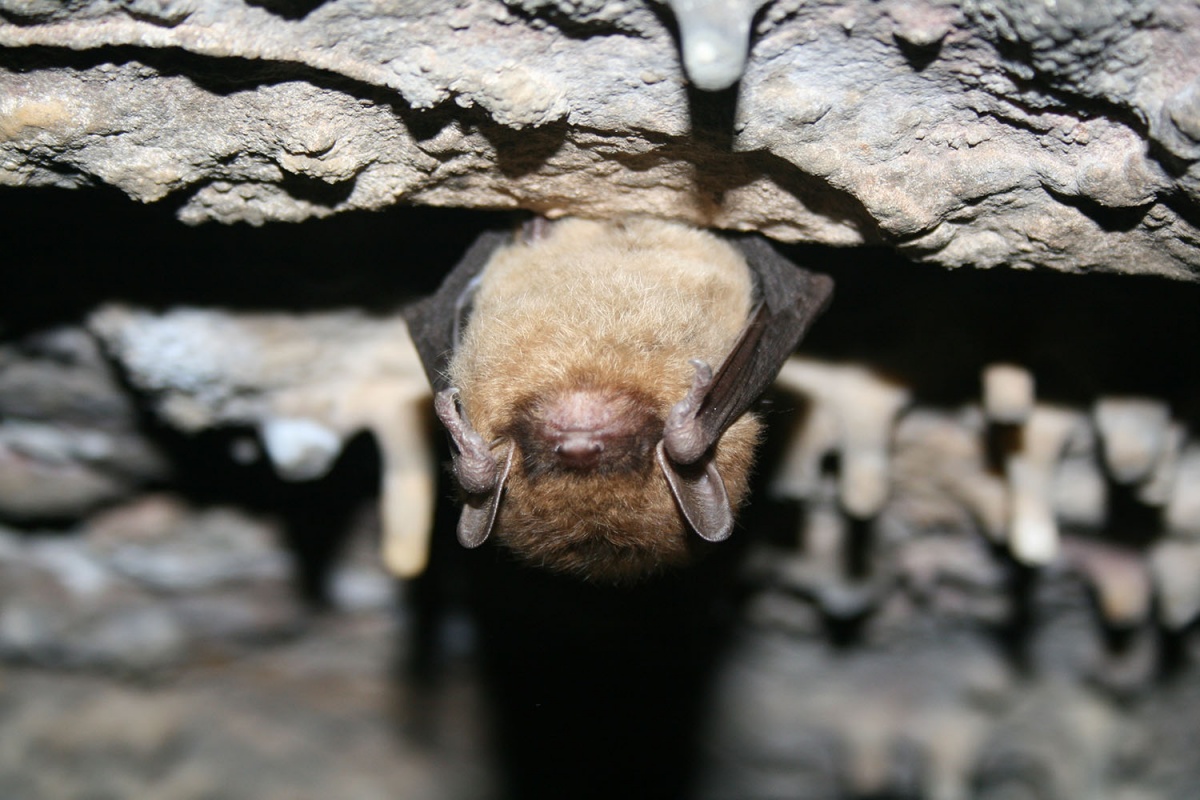
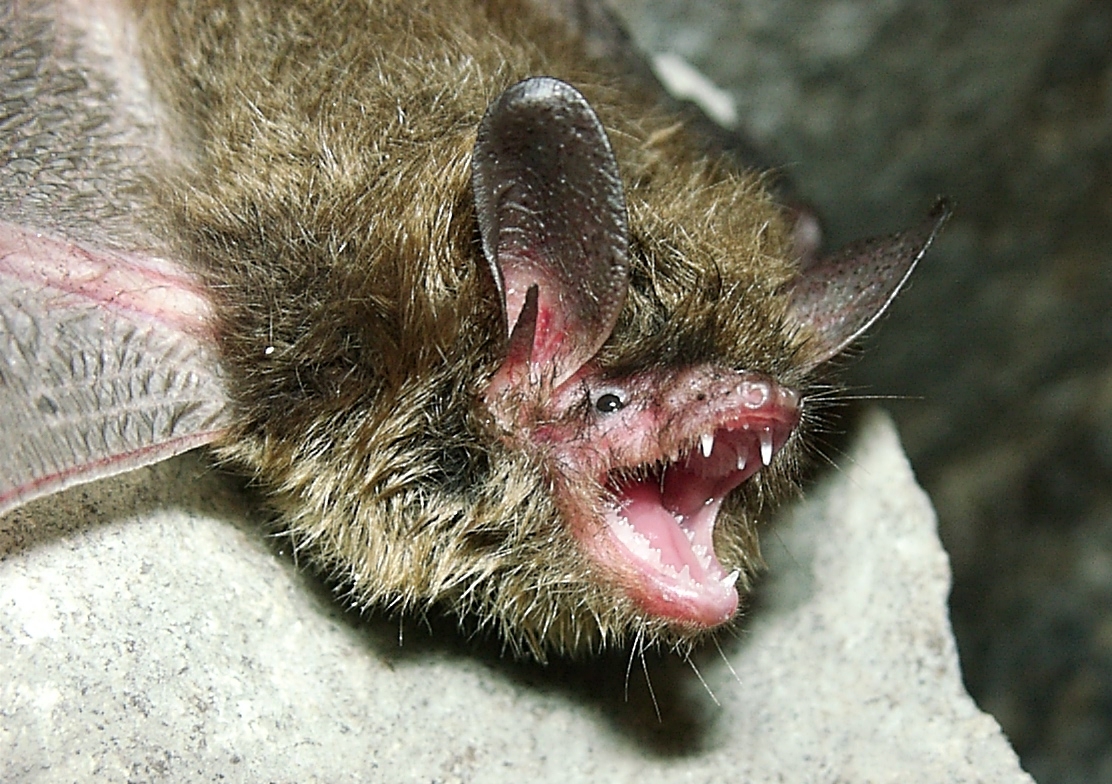
The little brown bat lives up to its name. It weighs only a 1/4-1/3 of an ounce, is about 2 inches long, has a 6-inch wingspan and you‘ll never guess what color it is. Photo by Ann Froschauer, USFWS.
2. Not all bats hibernate. Even though bears and bats are the two most well-known hibernators, not all bats spend their winter in caves. Some bat species like the spotted bat survive by migrating in search of food to warmer areas when it gets chilly.

The Northern long-eared bat spends winter hibernating in caves and mines. Photo by Andrew King, USFWS.
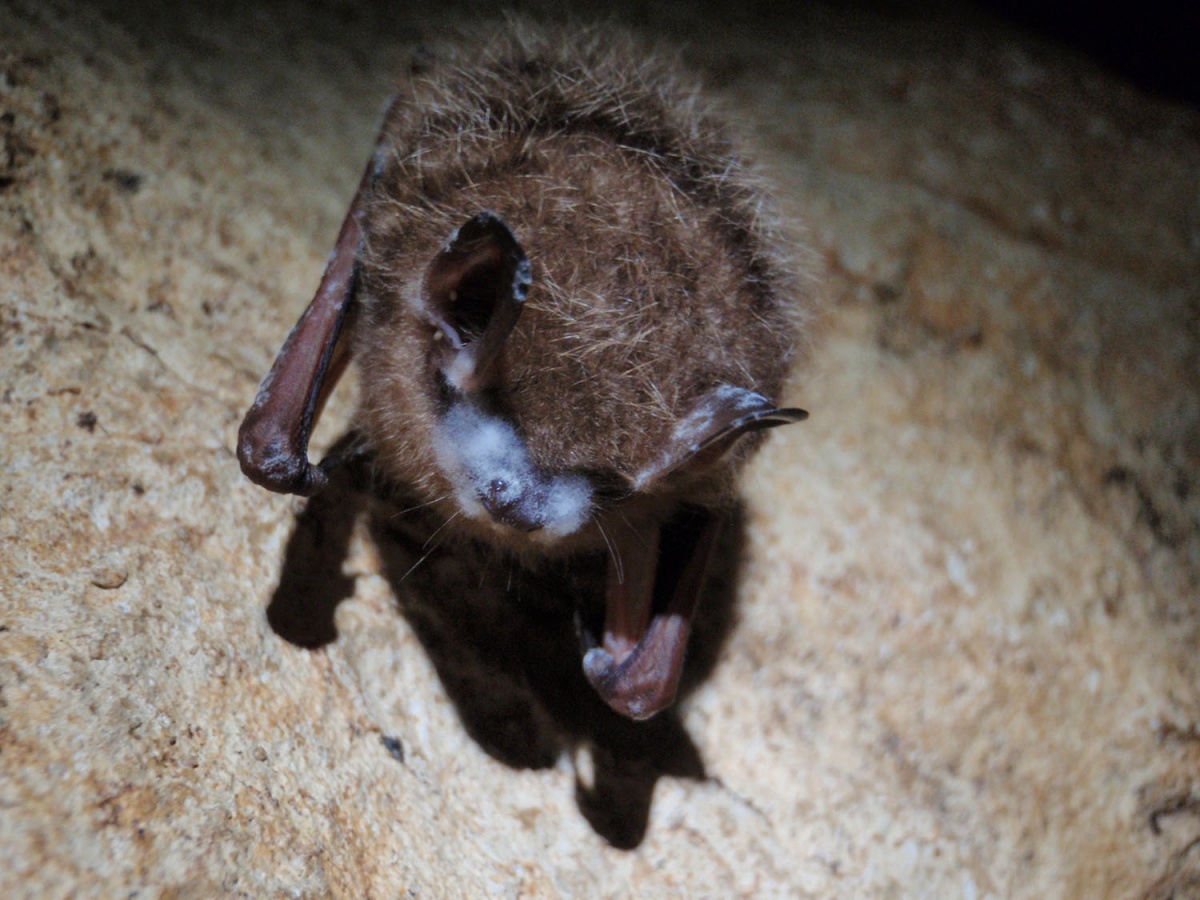
3. Bats have few natural predators — disease is one of the biggest threats. Owls, hawks and snakes eat bats, but that’s nothing compared to the millions of bats dying from white-nose syndrome. The disease — named for a white fungus on the muzzle and wings of bats — affects hibernating bats and has been detected in 37 states and seven Canadian provinces. This deadly syndrome has decimated certain species more than others. It has killed over 90% of northern long-eared, little brown and tri-colored bat populations in fewer than 10 years. Scientists are working to understand the disease. You can help by avoiding places where bats are hibernating(link is external). If you do go underground, decontaminate your clothing, footwear and gear to help with not spreading this disease to other areas.

A tri-colored bat shows symptoms of white-nose syndrome. Photo by National Park Service.
4. Without bats, say goodbye to bananas, avocados and mangoes. Over 300 species of fruit depend on bats for pollination(link is external). Bats help spread seeds for nuts, figs and cacao — the main ingredient in chocolate. Without bats, we also wouldn’t have plants like agave or the iconic saguaro cactus.

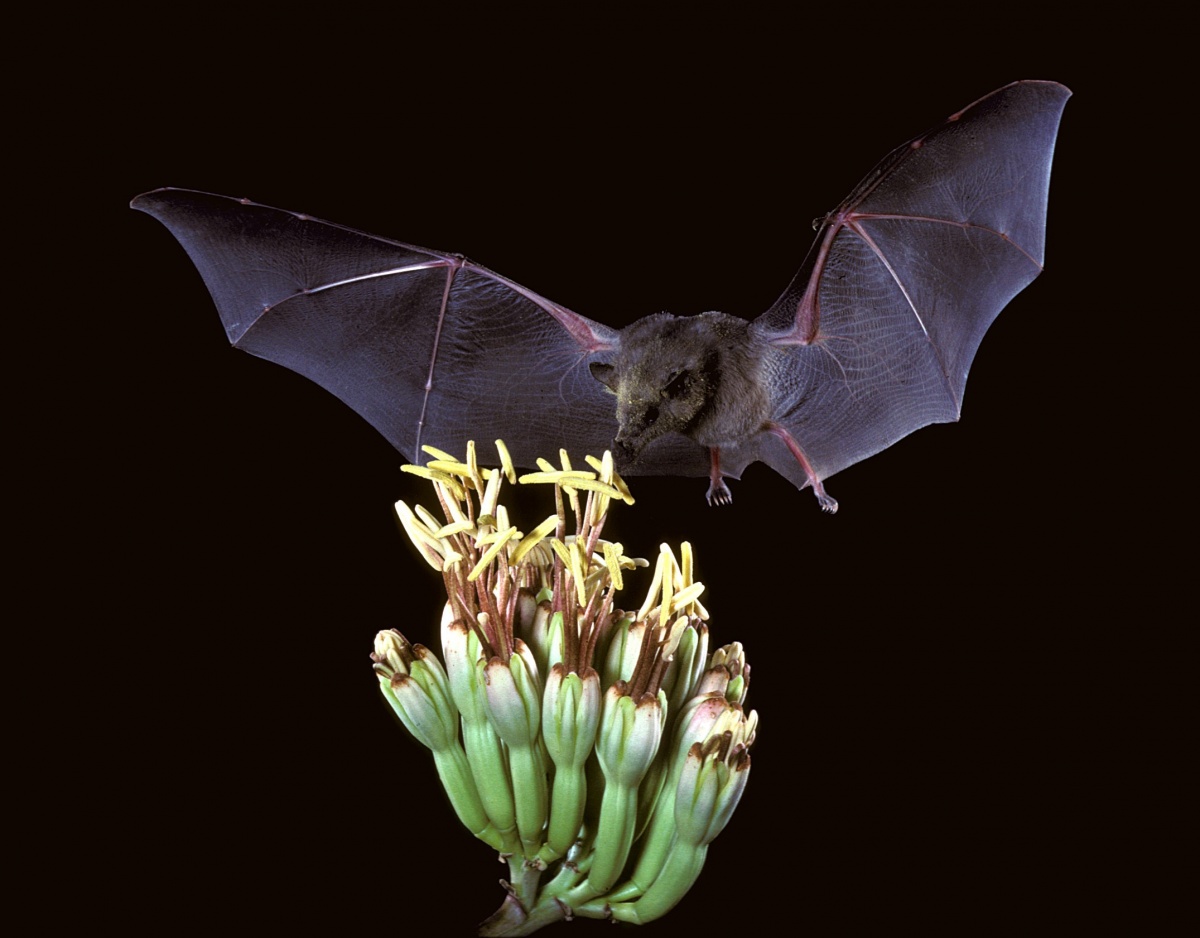
Just like a hummingbird, the lesser long-nosed bat can hover at flowers, using its 3-inch-long tongue — equal to its body length — to feed on nectar in desert environments. Photo by Merlin D. Tuttle, Bat Conservation International.
5. Night insects have the most to fear from bats. Each night, bats can eat their body weight in insects, numbering in the thousands! This insect-heavy diet helps foresters and farmers protect their crops from pests.

The endangered Indiana bat, which weighs about three pennies, consumes up to half its bulk every evening. Photo by Andrew King, USFWS.
6. Bats are the only flying mammal. While the flying squirrel can only glide for short distances, bats are true fliers. A bat’s wing resembles a modified human hand — imagine the skin between your fingers larger, thinner and stretched. This flexible skin membrane that extends between each long finger bone and many movable joints make bats agile fliers.

California leaf-nosed bats exit a cave at Joshua Tree National Park. You can easily distinguish these bats by their leaf-like noses and large ears. Photo by Kristen Lalumiere, National Park Service.
7. Bats may be small, but they’re fast little creatures. How fast a bat flies depends on the species, but they can reach speeds over 100 miles per hour(link is external) according to new research.

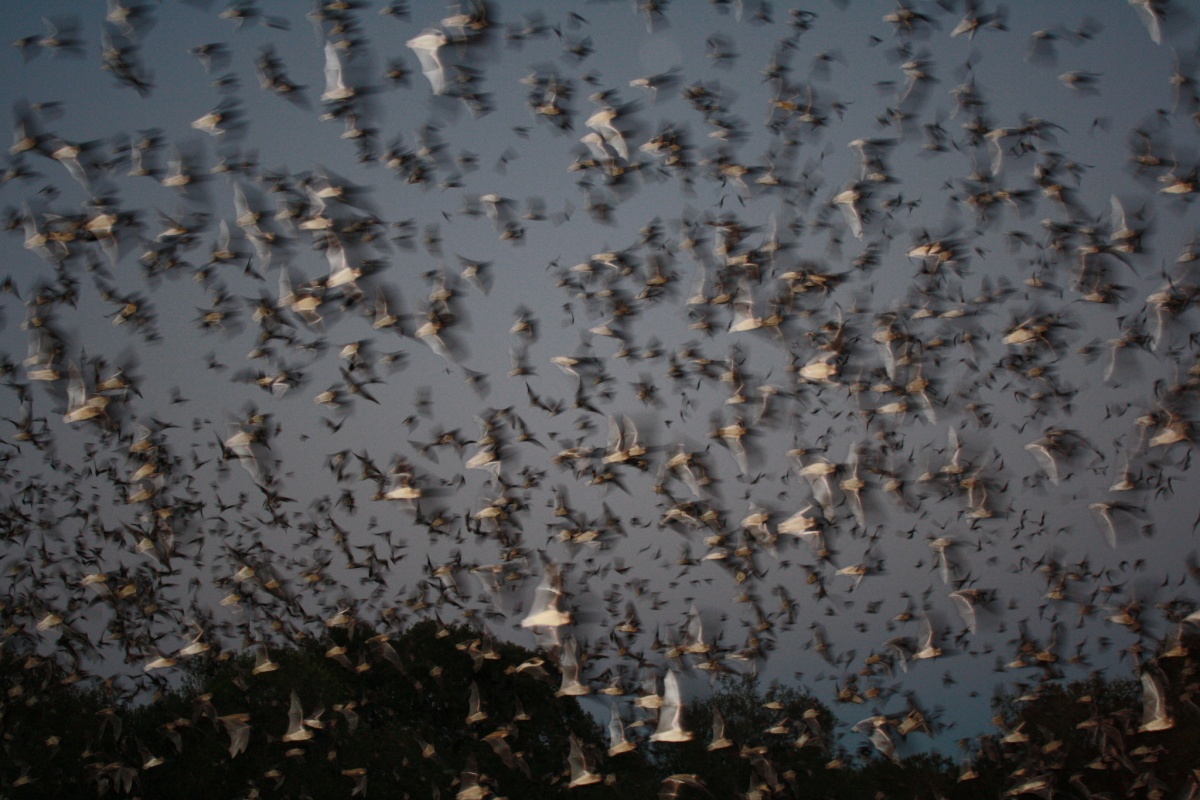
Mexican free-tailed bats emerge from Texas’s Bracken Cave. Over 15 million bats live there, making it the largest known bat colony (and largest concentration of mammals) on Earth. Photo by Ann Froschauer, USFWS.
8. Conservation efforts are helping bat species recover. At least 12 types of U.S. bats are endangered, and more are threatened. These amazing animals face a multitude of threats including habitat loss and disease, but we're working to change that. A unique international conservation partnership in the southwestern U.S. and Mexico has been working to help one species, the lesser long-nosed bat, recover to the point it can be removed from the Endangered Species list. In 1988, there were thought to be fewer than 1,000 bats at the 14 known roosts range wide. There are now an estimated 200,000 bats at 75 roosts!

The ancestors of the endangered Hawaiian Hoary Bat traveled over 3,600 kilometers from the Pacific Coast almost 10,000 years ago to become Hawaii's state land mammal. Photo by Frank Bonaccorso, USGS.
9. The longest-living bat is 41 years old. It’s said that the smaller the animal, the shorter its lifespan, but bats break that rule of longevity. Although most bats live less than 20 years in the wild, scientists have documented six species that life more than 30 years. In 2006, a tiny bat from Siberia set the world record at 41 years(link is external).

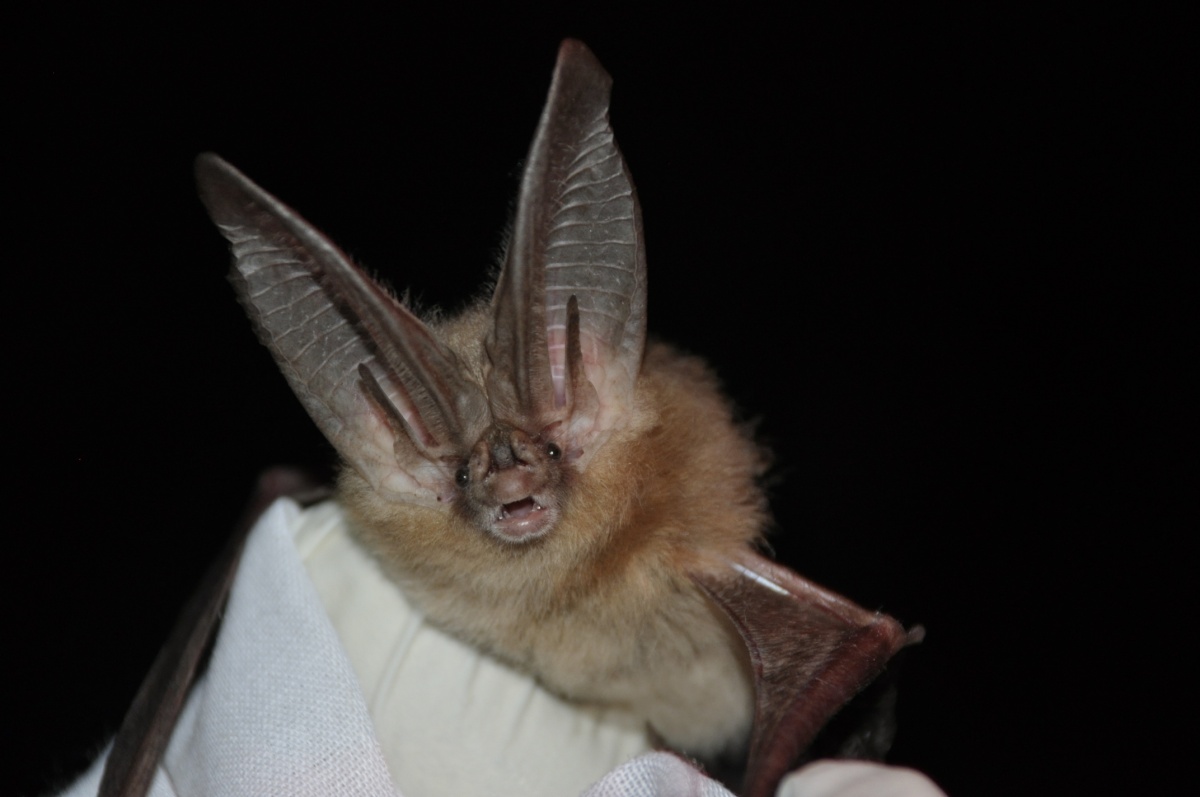
The Townsend's big-eared bat's average lifespan is 16 years. Photo by Ann Froschauer, USFWS.
10. Like cats, bats clean themselves. Far from being dirty, bats spend a lot of time grooming themselves. Some, like the Colonial bat, even groom each other. Besides having sleek fur, cleaning also helps control parasites.

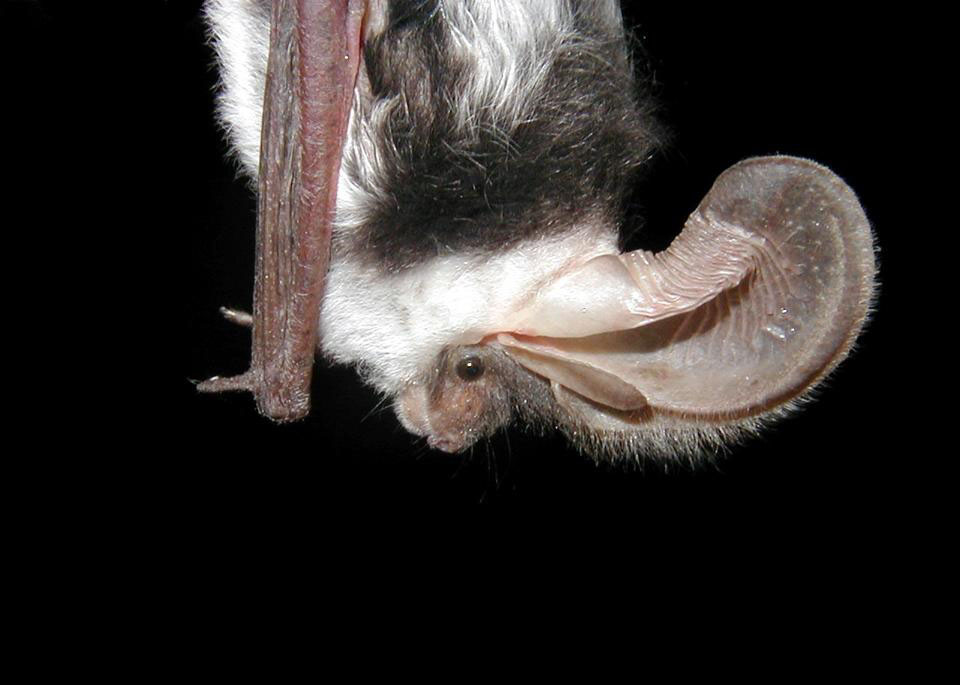
The spotted bat gets its name from its distinct appearance of black and white spotted fur. Another interesting fact about the spotted bat — it has the largest ears of any North American species. Photo by Paul Cryan, USGS.
11. Dogs aren’t the only ones with pups. Baby bats are called pups, and a group of bats is a colony. Like other mammals, mother bats feed their pups breastmilk, not insects. Most bats give birth to a single pup! There is at least one species that commonly has twins and that is the eastern red bat. Momma bats form nursery colonies in spring in caves, dead trees and rock crevices.

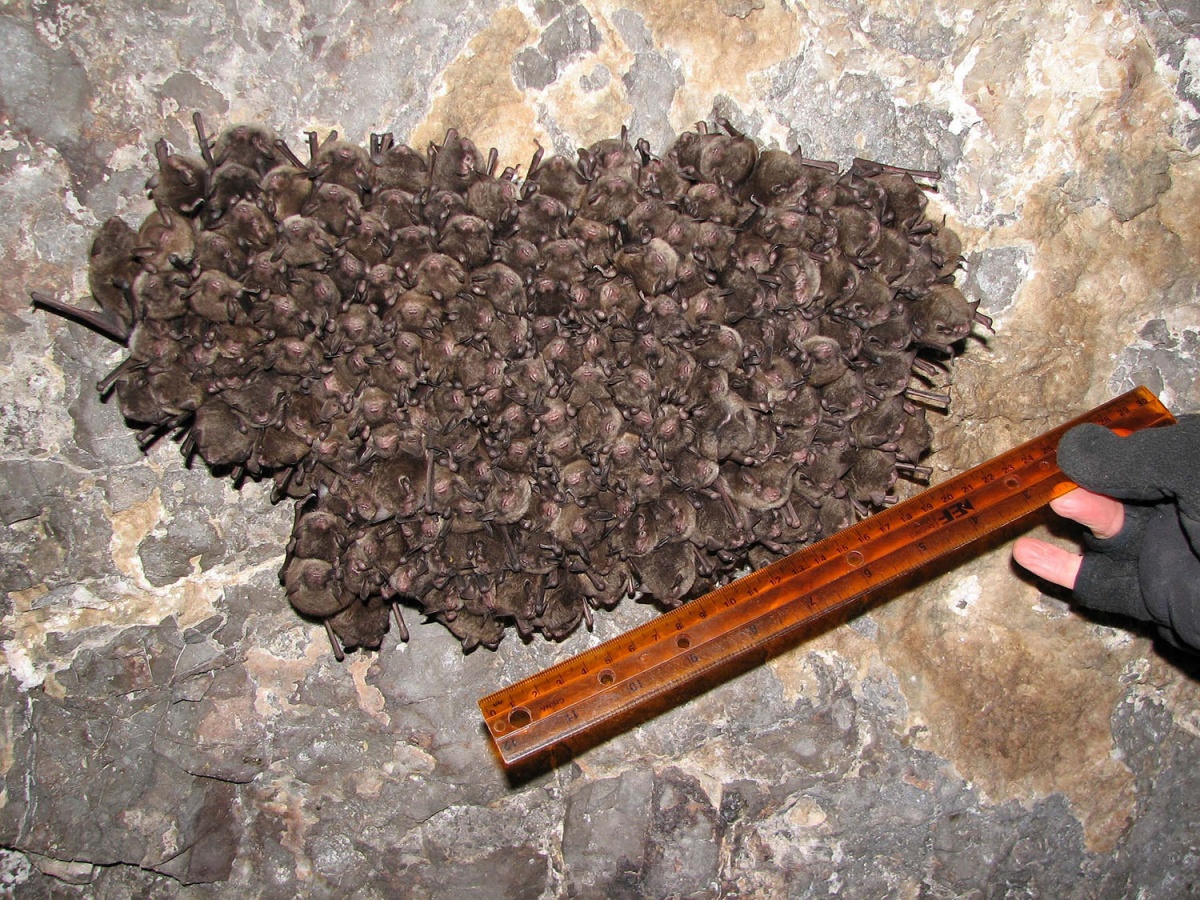
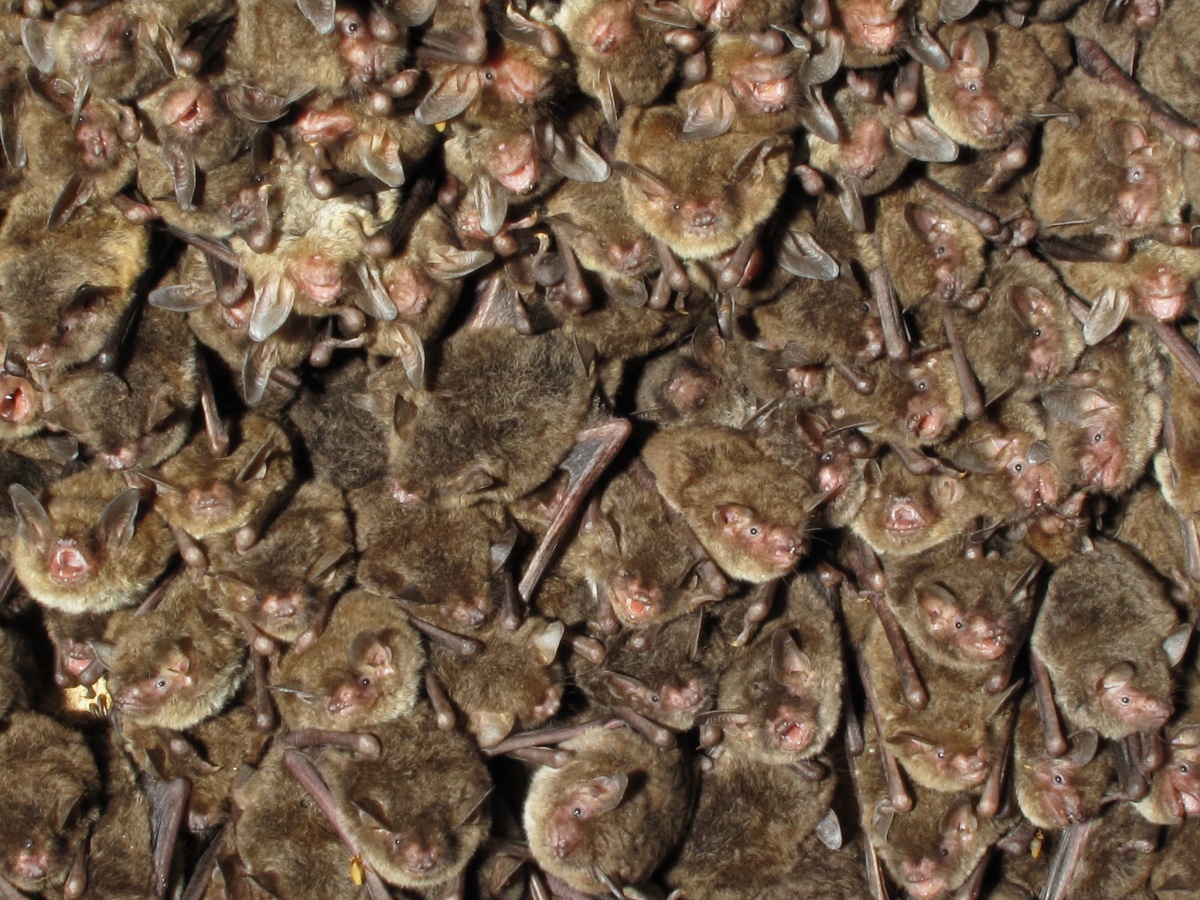
Bats benefit from maintaining a close-knit roosting group because they increase reproductive success, and it is important for rearing pups. Photo by Alan Cressler, USGS.
12. Bats are inspiring medical marvels. About 80 medicines come from plants that rely on bats for their survival. While bats are not blind, studying how bats use echolocation has helped scientists develop navigational aids for the blind. Research on bats has also led to advances in vaccines.

The Mexican long-tongued bat is a vital pollinator in desert systems. They have a long, bristle-like tongue, allowing them to sip nectar from agave and cacti. Photo by USFWS.
13. Innies or Outies? Humans aren’t the only ones with belly buttons(link is external). With a few exceptions, nearly all mammals have navels because of mom’s umbilical cord, and bats are no different. Now the real question is: Innies or outies?

Can you spot this Mariana Fruit bat’s belly button? Photo by Julia Boland, USFWS.

Retired
muh-muh-muh-MOGUL!
[SIGPIC][/SIGPIC]
[TGS] Forever!
Velo's #1 BoyFanFriend!
Need To Get In Touch? Nyce#0394 on Discord!
dead asf ngl

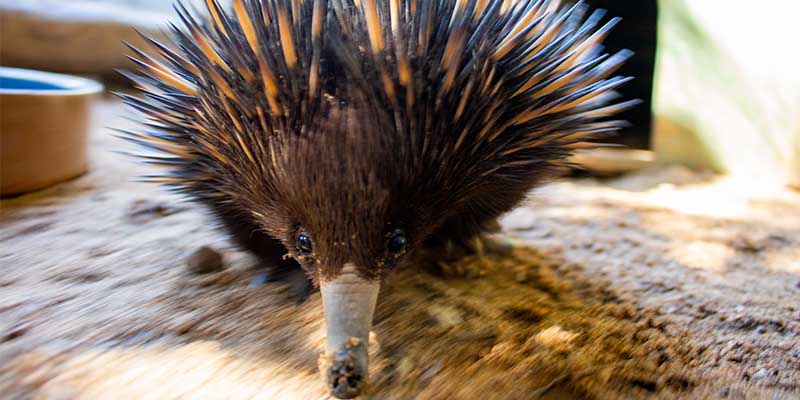
It’s renowned as one of our most iconic Aussie animals – characterised by an adorable waddle, spiky exterior, and shy disposition – but how much do you really know about the echidna? If you’re looking to sharpen up on your echidna fast facts, Currumbin Wildlife Sanctuary has prepared a few to get you started. Read on!
1. THEY ARE AN EGG-LAYING MAMMAL

These prickly little guys evolved between 20 and 50 million years ago, but are still considered quite enigmatic by researchers and scientists. This species of monotremes (a unique, egg-laying mammal) is one of 3 in the world! (And in case you’re wondering, the only other is the platypus.)

2. THERE ARE TWO TYPES OF ECHIDNAS

Today, there are two genera of echidna – the Long-beaked Echidna (belonging to the genus Zaglossus), which are native to New Guinea, and of course the Short-beaked echidna (belonging to the Tachyglossus genus), of which there are over 20 who call Currumbin Wildlife Sanctuary home, including a gorgeous puggle called Pooh Bear who’s recently joined the family!
3. THEY ARE NAMED AFTER THE MOTHER OF MONSTERS

These unique characters were actually named after “Echidna” – a creature from Greek mythology who was renowned as the “Mother of Monsters”, believed to be a half woman, half snake. Why, you ask? Well, the animal was perceived by scientists early on to have both reptilian and mammalian features – just like their namesake.
4. THEY HAVE TOOTHLESS JAWS

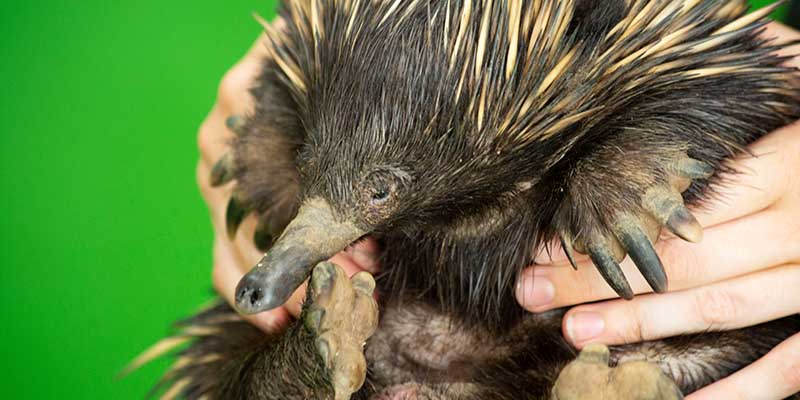
Believe it or not, echidnas have toothless jaws… yep, that’s right – not one single tooth. Instead, they put their slender snouts and strong claws to work, tearing open logs, ant hills and other food sources, then use their long sticky tongues (we’re talking 15cm long!) and pads on the roof of their mouth to break down their food. Speaking of which, these guys love nothing more than a satisfying meal of ants, termites, worms and insect larvae – and have been known to eat roughly 40,000 per day!
5. THEIR BODY TEMPERATURE IS THE SECOND LOWEST OUT OF ALL MAMMALS

Of all the mammals in the world, echidnas have the second lowest body temperature (after the platypus), which is good news for their life span – on average, they’ve been known to live for up to 50 years in captivity, and 45 years in the wild. This is primarily attributed to their low body temperature and oh-so-slow metabolism.

6. ECHIDNA’S MAXIMUM SPEED IS 2.3 KILOMETRES PER HOUR

These spiky little creatures don’t like to go anywhere in a hurry… haste is certainly not an echidna’s strong suit. In fact, they have a maximum speed of 2.3 kilometres per hour, but are more likely stick to a leisurely dawdle of 1 kilometre per hour. We’ll forgive them though, as that waddle is just too cute for words.
7. THEY STAY IN THE POUCH FOR 7 WEEKS

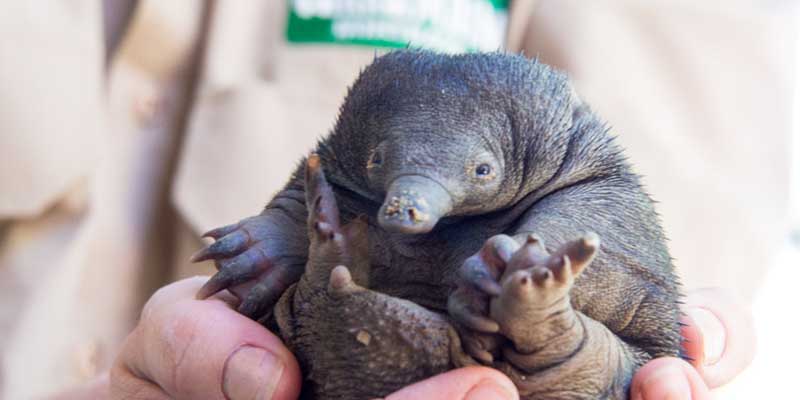
As mentioned earlier, echidnas fall into the extremely rare category of monotremes – quite the anomaly and different to any other mammal as they lay eggs and have no teats. Once a female echidna lays the egg into her pouch, it will hatch after roughly 10 days of incubation – coming out the size of a jellybean, blind and hairless! It’s in their mother’s pouch that they spend the first seven weeks post-birth, and are left in a burrow when the puggles become too big and prickly as their spines start developing. When it comes to mealtime, puggles are fed through special glands in their mum’s pouch called milk patches.

8. ECHIDNA’S CURL UP INTO A BALL WHEN THEY BECOME FRIGHTENED

Appearances can be deceiving when it comes to the echidna… while they might look fearsome lending to their spiny exterior, these animals are actually quite shy, on the contrary. When confronted by a predator or become frightened, they’ll typically curl up into a ball, tucking in its snout and legs – both hiding and protecting themselves with an armour of spikes. However, their spines are no match for dogs and cars.
9. THEY ARE ‘ECOSYSTEM ENGINEERS’

Did you know that echidnas are often referred to as ‘ecosystem engineers’? While they might not seem the most active of animals, they spend an incredible amount of time digging and moving soil – with a study showing this to be an average of 200 cubic metres of soil each year, per echidna! By turning over so much, this improves soil mixing and water penetration, reduces run-off and erosion, and ultimately makes for healthier soils, which can lead to plant growth. It’s fair to say these guys are environmentally minded!
10. THEY ARE HELPING TO SAVE THE ENDANGERED LONG-BEAKED ECHIDNA

Currumbin Wildlife Sanctuary has worked collaboratively with the University of Queensland on a successful research project over the past 15 years focused on echidnas and their reproduction. This has resulted in the breeding of 19 puggles and total of 25 Short-beaked Echidnas at Currumbin Wildlife Sanctuary to date – one of the only zoos in the world to have achieved this”. This work will continue over the next three years, thanks to an Australian Research Council Grant, which will assist with the long-term goal of saving the endangered Long-beaked Echidna of Papua New Guinea.

Retired
Big Sky Wildlife Spotlight: Wolves

Wolves are one of the many types of wildlife that live in Big Sky, Montana. It's rare to see a wolf, but we definitely share our backcountry playground with these creatures.
The next time you head out on a ski tour in the Lee Metcalf Wilderness, climb a remote peak, or backpack through the Taylor Hilgards, look out for wolf prints and listen for the distinct howling of Montana wolves. They are most certainly out there.
Here are a few fun and interesting facts about wolves to share with your friends:
  • The scientific name for a gray wolf is Canis lupus.
  • Wolves are the largest members of the Canidae family.
  • Males average 5 to 6.5 feet in length from nose to tip of tail. Females average 4.5 to 6 feet.
  • Most wolves stand at 26 to 32 inches at the shoulder.
  • Females weight 60 to 80 pounds. Males weight 70 to 110 pounds.
  • A wolf footprint will measure 4 inches wide by 5 inches long
  • Wolves can live up to 13 years in the wild.
  • Wolves have 42 teeth.
  • They have four toes with claws in an oval shape. They run on their toes, not their pads.
  • Wolves mate for life.
  • A litter of wolves is usually 4 to 6 pups.
  • Pups are born deaf and blind with bright blue eyes.
  • A pack of wolves can range from 2 to over 30 wolves. On average they run in packs between 5 and 8 wolves.
  • Wolves can run at 36 to 38 MPH.
  • Wolves were killed off in Montana in the late 1930's, but were reintroduced in Yellowstone National Park the 1995 and 1996 and their numbers are currently increasing.
  • In 2013, there were at least 625 wolves in western Montana.
  • The Montana Fish, Wildlife, and Parks allows up to 100 wolves to be hunted per year.
  • Gray wolves can range in color from gray, black, tan, or white.
  • Wolves prey on elk, deer, moose, and other animals.
  • Wolves have over 200 million scent cells.
  • They can hear up to six miles away in the forest.
  • A wolf's jaw has a crushing power of nearly 1500 pounds per square inch!
  • A wolf can eat 20 pounds of meat in one meal.
  • Wolves can swim up to 8 miles!
  • A wolf howl can be heard up to 10 km away.
  • Wolves were the first animals to be place on the US Endangered Species Act list in 1973.
  • Only two wolf attacks have led to fatalities in North America (one in Alaska and one in Canada) during the 21st Century.
  • Wolves do not hibernate and can potentially be seen all year long.

While you may never see a wolf in the wild, there's a good chance that a wolf will either smell, see, or hear you stomping around through the woods. The best spot to see a wolf is from the safety of your vehicle while cruising through Yellowstone National Park.

If you do see one, remember that wolves are wild animals and should not be approached. Ever. If you want to safely see a wolf in person, visit the Grizzly and Wolf Discovery Center in West Yellowstone to see these amazing creatures up close.

Retired